
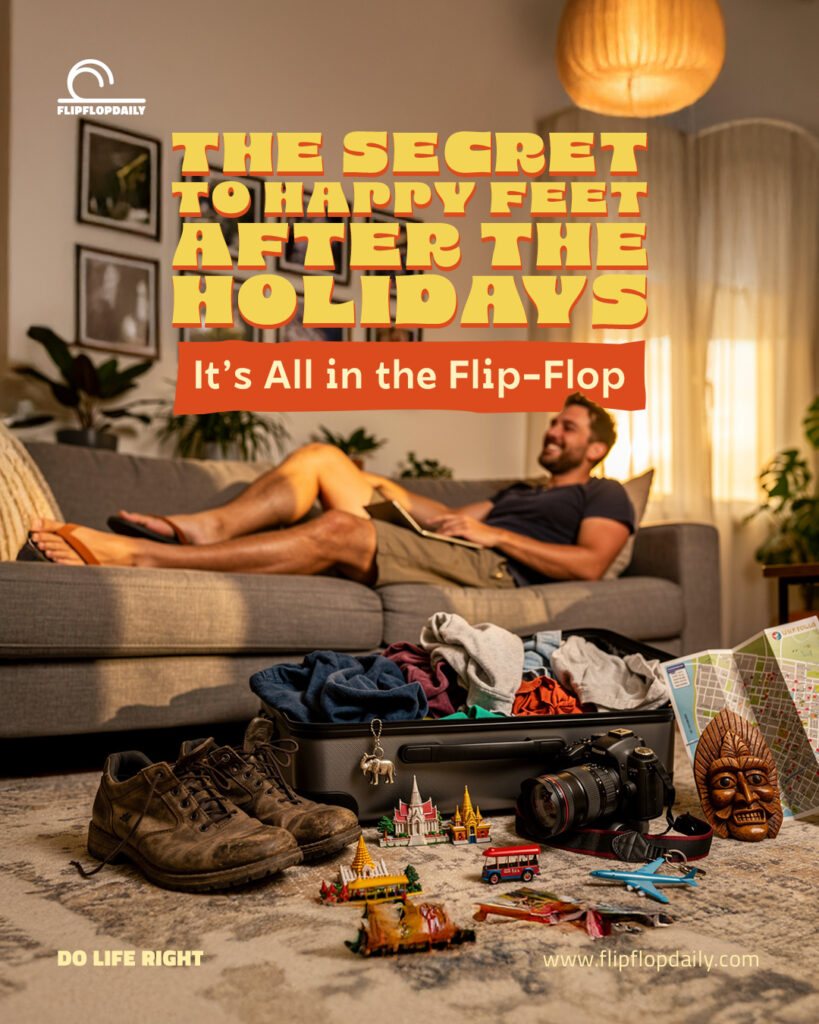
There’s a very specific moment that happens on vacation.
You unzip the suitcase. You kick off whatever “real shoes” you traveled in. And you slide your feet into flip-flops for the first time in days, maybe weeks.
Instant relief.
Your toes spread. Your feet breathe. Your shoulders drop without you even noticing. It feels easy. Free. Like your body remembers something it forgot during regular life.
Then you get home.
A few days later, your heels feel tight. Your arches ache. Your calves are doing that weird sore-but-not-from-a-workout thing. And suddenly flip-flops get blamed for everything.
But here’s the thing no one really talks about: flip-flops aren’t the villain. It’s how we use them, and how tuned in (or not) we are to our feet.
Why flip-flops feel so good on holiday
On vacation, life slows down. You walk differently. You’re not rushing through parking lots or powerwalking with coffee in one hand and your phone in the other. You’re strolling. Wandering. Standing around chatting. Sitting more. Moving less aggressively.
That matters.
Your nervous system is calmer. Your body isn’t bracing all the time. And when you slip on flip-flops in that state, your feet don’t have to work overtime to keep you upright.
Flip-flops also give your feet space. No stiff sides. No cramped toe box. Nothing squeezing your forefoot into a shape it doesn’t want to be in. For many people, that alone feels like freedom.
The problem starts when we bring holiday footwear into everyday life without bringing the holiday mindset with it.
What actually happens when you wear flip-flops a lot
Flip-flops don’t hold your heel. There’s no structure telling your foot what to do. So your body has to figure it out on its own.
For some people, that’s no big deal. For others, the toes start gripping to keep the shoe on. The arch stiffens. The calf tightens. The ankle gets a little wobbly. And before you know it, you’re compensating your way through every step.
You might notice:
- Tight calves by the end of the day
- Heel or arch soreness
- Achy knees or hips
- A general feeling that your legs are working harder than they should
None of that means flip-flops are “bad.” It just means your feet are being asked to do more, and they may not be ready for it yet.
Happy feet aren’t about better flip-flops
This is where people usually ask for “supportive” flip-flops. Thicker soles. Arch bumps. More straps.
Those can help sometimes, but they miss the bigger picture.
Happy feet come from awareness and connection, not just footwear.
If you’re clenching your toes every time you take a step, no flip-flop on earth is going to fix that. If your hips are tight and your stride is rushed, your feet will pay the price.
The good news? You don’t need complicated exercises or a foot boot camp to change this.
A few simple habits that make a big difference
1. Pay attention to how you’re holding the flip-flop
Next time you walk, notice your toes. Are they gripping? Curling? Pressing down hard? See if you can let them soften just a little. The flip-flop might feel less “secure” at first. That’s okay. You’re teaching your foot a new option.
2. Slow down your steps
Flip-flops reward slower, smoother walking. Shorten your stride. Let your heel touch down gently. Roll through the foot instead of slapping it on the ground.
This alone can reduce a lot of end-of-day soreness.
3. Give your feet some daily attention
Nothing fancy. Just a minute or two.
- Pull gently on each toe
- Massage the sole with your thumb
- Run your fingers between your toes if you can
You’ll be surprised how much tension lives there.
4. Remember your feet are connected to everything else
Tight hips change how your feet land. A stiff lower back affects your stride. If flip-flops suddenly feel harder to wear, it might not be your feet at all.
A few gentle twists, hip circles, or slow walks where you actually feel your legs moving can help more than any insole.
The real secret
The secret to happy feet after the holidays isn’t giving up flip-flops. It’s keeping a bit of that holiday awareness with you.
Move like you’re not in a rush.
Let your feet feel the ground.
Notice when you’re gripping or bracing.
Give your body time to adapt instead of forcing it to behave.
Flip-flops don’t weaken your feet. Ignoring your feet does.
When you treat flip-flops as part of a bigger conversation with your body instead of a guilty pleasure, they stop being a problem. They become what they were meant to be in the first place: simple, easy, and genuinely enjoyable.
And honestly, if something makes your whole body relax the moment you put it on, that’s probably worth paying attention to.
It’s Time to Do Life Right!
Check out the best flip flop reviews, flip flop advice and flip flop philosophy on how to live a flip flop life!